Sunday, August 24, 2008

Medical Advisor Journals----Cholesterol Levels & Hypertension Articles Written By Friends and Authors of Ezine Articles.Com

Drinking Water - Does it Lower Blood Pressure?
By Judith Airey


Sometimes when reading tips for reducing blood pressure, drinking water is recommended. However, authority websites including the National Heart, Lung and Blood Institute and the Mayo Clinic do not mention drinking water to lower blood pressure, when discussing treatments and lifestyle changes.

Why should some articles say that drinking water lowers blood pressure?

The idea that drinking water will lower blood pressure seems to come from the idea that when lots of water is consumed, that sodium will be flushed out of the body and consequently pressure will drop.

After all, several classes of diuretics are very effective at reducing pressure. These diuretics function by increasing the loss of sodium from the body and an increased volume of urine. Both the loss of sodium from the blood and decreasing the blood volume result in decreased blood pressure.

So, if drugs, that effectively lower blood pressure in most people, work by increasing the volume of urine and the amount of sodium in the urine, then drinking more water should do the same thing?

Unfortunately, there is a problem with this reasoning. To understand why, it is necessary to understand that the body very tightly controls the levels of fluid and ions such as sodium and calcium. For optimal functioning, the body has evolved a wide range of control processes that are involved in keeping many ions and fluid levels within a narrow range.

Diuretics act on parts of the system that control sodium. For instance thiazide diuretics bind to, and inhibit, a protein called the Na/Cl symporter (Na=sodium, Cl=chloride) that controls the amount of sodium that is reabsorbed back into the blood from the urine that is being formed. The result is that the body recovers less sodium from the urine as it is being formed, and so more sodium is lost in the urine and there is a slight increase in volume. So diuretics affect the regulatory system and change a part of this.

Water has no impact on the sodium or fluid control system so it will not change the total amount of sodium in the urine, or change the blood volume. Drinking more water will increase the volume of urine as the body regulates fluid levels, to keep the blood volume stable. Additionally, the same amount of sodium (and other ions etc.) in a bigger volume will lead to the urine being more dilute.

Think about the color of urine. If not much fluid has been consumed, or there has been a lot of sweating, there will a small quantity of urine with a strong yellow color (from urobilin). If a person is well hydrated, there is more urine with a pale color. Same thing with sodium. In a healthy individual, the greater the volume of urine due to increased fluid consumption, the lower the concentration of sodium.

So the bottom line is that, generally, increasing the amount of water that is consumed will not increase the amount of sodium lost by the blood, so blood pressure will not be lowered.

In fact, drinking water can actually cause a very short term increase in blood pressure in some people, particularly those with some types of very low blood pressure. This is only temporary and has no long term impact on blood pressure.

Keeping hydrated is good for health, but overhydration has no benefit for lowering blood pressure.

Judith Airey PhD. is a biomedical researcher with a range of interests including all things cardiovascular. She has several health-related websites including a blood pressure information site http://www.infobloodpressure.com/ and a blog http://www.lifeagingand.com/

Friday, July 4, 2008

Heart Disease Prevention: Adopting a Healthier Lifestyle


Heart Disease Prevention: Adopting a Healthier Lifestyle
By Milos Pesic

Heart disease prevention is not difficult. In fact, it can be easy with just a few lifestyle changes to prevent the number one cause of death among women. It is said that over 58 million Americans suffer from some form of heart disease, so it would seem natural that heart disease prevention should be a part of our everyday vocabularies.

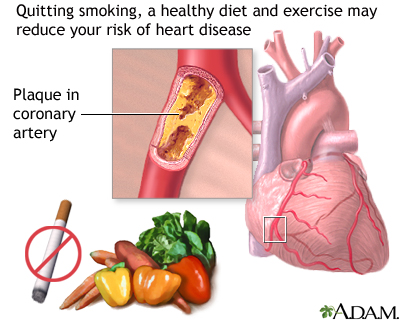
The number one key to heart disease prevention is adopting better living habits. Simple changes like eating better, getting more exercise, and being more health conscious in general have shown that they can drastically reduce your chances of acquiring heart disease.

Control Your Eating Habits

For optimal heart disease prevention, it’s necessary to improve your eating habits. First, avoid foods high in saturated fat and trans fatty acids. Saturated fats are naturally found in food that comes from animals: meat, eggs, dairy products, as well as some oils. Trans fatty acids are usually found in commercially baked or fried foods. By lowering the amount of these fats from your diet, you will ensure your heart’s health.

Second, eats lots of fruits and vegetables and make sure you take in more fiber. It’s also a good idea to take a multi-vitamin; not only will a multi-vitamin assist you in your heart disease prevention, it will help prevent other diseases as well such as cancer or Alzheimer’s.

Work Out for Your Health

Getting more exercise is another habit necessary for heart disease prevention. Many don’t realize that getting more exercise doesn’t need to include the gym or exhausting aerobic sessions. It can be done at work, home, school, or anywhere else, really. If you can, walk instead of drive, park further away from your destination, or just take the stairs instead of the elevator. When you’re at the store, make an extra trip around the aisles, just to make sure you picked up everything on your list. Wherever you are, stay conscious of the amount of exercise you get daily, and not only will you improve your overall health, but you’ll look and feel better than ever.

Keeping Healthy

More positive habits include: stopping smoking, reducing or eliminating alcoholic drinks, and reducing stress. While that last one might not seem so easy, it can be with the many tricks to stress relief. Merely counting to ten or taking several deep breaths can often calm you down and make you feel more under control in even the most stressful of situations. By keeping your stress managed and eliminating foreign chemicals from your body, you will live longer, healthier, and, ultimately, happier.

Heart disease prevention is not difficult and can be done with a few minor lifestyle changes that will improve your health and make you feel better. Once you’ve adopted these great lifestyle habits, you’ll want to tell your friends and family all about them. After all, when you’re living a long and happy life, you’re going to want someone around to share it with you. By sharing these tips with those you love, you’re showing the ultimate love of all – you’re showing them heart disease prevention and saving their life.

Milos Pesic is an expert in the field of Heart Diseases and runs a highly popular and comprehensive Heart Disease web site. For more articles and resources on Heart Disease related topics, Congenital Heart Disease, Coronary Heart Disease, Ischemic Heart Disease, Heart Disease symptoms and treatments and much more visit his site at:

=>http://heart-disease.need-to-know.net/